

For designersScene and Interface personas
Real-time design, no build step.
- Place, move and scale in the viewport; every property is a row in the inspector, and every change is undoable.
- Materials, lights, shadows and particles, live in the scene you are editing.
- Press play. The scene you designed is the game, and the HUD is laid out over the safe area right there.
For programmersScript persona
Save the script. It is already running.
- Rune reads like Rust without the types: no build step, async/await, one language for the game and the editor.
- Hot reload in milliseconds with state intact; breakpoints, stepping, frames and locals in the editor.
- Plugins in Rust or C when you want the metal, and one file to ship when you are done.
Balaur for game developers →Scripting →Extensions →Open examples/hello →
For animatorsAnimate persona
2D and 3D animation for games, rigged where you play it.
- Bend and deform images with mesh skinning: bones, painted weights, polygons.
- Pose with inverse kinematics, two-bone IK and look-at, and key it in the timeline.
- 3D rigs imported from glTF; clips, tweens and twelve easings drive any property.
For multiplayer and simulationPhysics persona
Deterministic by default: same inputs, same bits, on every machine.
- A fixed 60 Hz tick and a digest per tick, so the engine can prove two machines agree.
- Record inputs only, network included, and replay the whole session; rollback-ready.
- HTTP, websockets and QUIC delivered once per tick; rooms and server hooks through Gamend.
Balaur for multiplayer →Determinism manual →Open examples/angrynerds →
For artistsScene persona, shaders and rendering
Lights, shadows and shaders you can read.
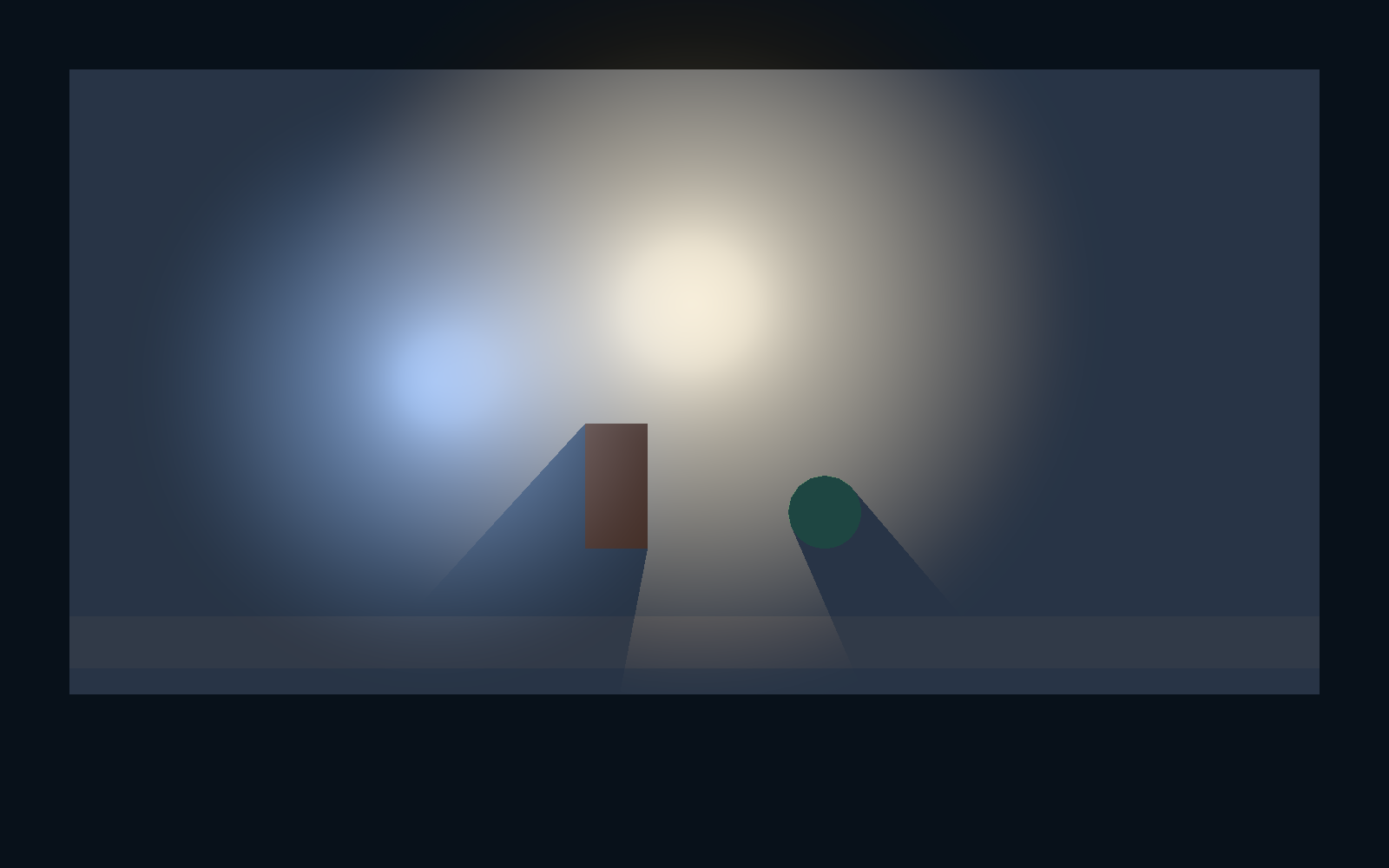
- 2D lights and occluders build a light map every sprite, polygon and tile is lit by.
- Materials in WESL, WGSL with imports and variants, linked at run time rather than at build.
- Post-processing, particles, tile maps, sprites and meshes on wgpu.
Nodes and scenes
A game is a tree of named nodes with scripts attached. Scenes are plain TOML.
Scripting in Rune
Rust's syntax, no build step, async/await, and a debugger in the editor.
Instant hot reload
Save a script while the game runs: the new code is live in milliseconds, state intact.
Determinism, always on
Same inputs, same bits on every platform. Record a session and replay it, network replies included.
2D and 3D physics
Rapier under both, stepped on a fixed 60 Hz tick, declared in scenes or driven from scripts.
Rendering
3D and 2D on wgpu: windowed, offscreen for screenshots and CI, or fully headless.
Animation and skeletons
Clips and tweens, 2D bones with skinned polygons, 3D rigs from glTF, two-bone IK.
The editor
Itself a Balaur project: scene tree, inspector, gizmos, timeline, rig tools, play-in-editor.
Networking
HTTP and websockets with compression, delivered into the simulation once per tick.
Every platform
Windows, macOS and Linux today; iOS, Android and the web are cross-compiled in CI on every push.
One file to ship
Export fuses bytecode, scenes and assets onto the runtime: one self-contained binary per target, nothing to install.
Built on Rust
Safe Rust throughout, and the ecosystem as it is: Rapier, wgpu, egui, rodio, Rune.
Free and open source, MIT. Windows, macOS and Linux.